August 1, 2022

Fugitives, Wanderers, or Pilgrims?

No comments:

Leaving bits and pieces of one’s life around the world... Camões

Coordinates of human life
The human being is a spatiotemporal being. He occupies a space for a time, so that, as it happens in the universe and nature that surround and involve us, there is nothing stationary or permanent about human life. We cannot stand still in time or in space: life implies movement, a process, a becoming, a path, a change.

By the way we use and situate ourselves in time or relate to it, we can be fugitives or vagabonds; the gospel, however, exhorts us to be pilgrims.

Life is wide, but short. It is wide in possibilities, in the many and diverse ways of using our time, but it is short in length. Therefore, there is nothing worse than to think we have to kill time because we have too much time on our hands. This is not true, so there is no time to kill nor time to lose, because the reality is that time is scarce.

Fugitives, vagabonds and pilgrims have in common the fact that they are not attached to people, things, or places. They are never stationary at one place, but easily move from place to place. Therefore, they also have in common the way they settle in time and how they live the present moment. But they differ in how they relate to the other two times of human life: the past and the future.

The pilgrim lives well the three dimensions of time, while the fugitive lives bound hand and foot to the past and fears the future. The penniless vagabond has no past, no present and no future, he lives suspended in time like a reed shaken by the wind.

Human time is three-dimensional: past – present – future
The three times in which life takes place are interactive: neither the past has passed completely nor all of the future is yet to come.  The two times exist in the present and interact with it. As such, the present does not always refer solely to the present, it can refer also to the past as well as the future. Just as the past and the future visit the present, the present can also move into the future and the past. The present in itself is what is occurring, but when we think about what is occurring, it is already in the past.

The past has passed, but is never gone; the future arrives, but is never fully here, it moves forward like a carrot tangling in front of the donkey’s snout. As long as we exist, all three times exist with us and we will only stop having a present and a past when we stop having a future, that is, when we die. Since all three live together, all three also die together, just a few seconds apart. We die from front to back: first the future dies, then the present and only then the past.  

We are like an arrow that someone has shot in the past. According to life’s circumstances, we can have some control over the direction the arrow takes, but we know that "all roads lead to Rome", that fate is common, that death is both certain and uncertain. Certain because it is the only thing we know for sure about our future, as Heidegger says, we are a being made for death. Uncertain because we do not know how or when we are going to die, and I don't think anyone is interested in knowing.

In case there is eternal life, as we Christians certainly believe, then the future dies and so does the past, because they cease to be interactive in the present. Life made up of ticking time ceases to be a reality. What we were, we are. What we are today is a contribution of both the good and the bad of our lives. All events in our past served as the scaffolding for the building construction. When construction is over, with our death, the scaffolding is no longer needed: what we turned out to be is now what we will be forever in eternity.

Our physical body also belongs to the category of scaffolding, because through it and with it we build our being, our spiritual body, and when it is built, time ceases in its dimension of future and past, and remains in its dimension of present, an eternal present in God and with God.

To live is to leave
People whose mother tongue is English can distinctively pronounce these two verbs without any effort; foreigners, however, tend to pronounce them the same way. The fact that I used to pronounce them in the same way led me to discover an intrinsic relationship between them.

To live means and implies to leave, to let go of the place where we are and go to another. The pilgrimage is printed in us already at the chromosomal and cellular level. If the tubules within the testes where sperm cells are produced were straightened, the total length would extend about 70 centimeters.

The X or Y sperm cell that gave us life passed through these tubules, and when ejaculated travelled further through our mother’s reproductive system until it united with its other half cell in the Fallopian tube and formed a new being. There the conception took place; but four days later, the new being had to leave this place in order to travel and live in the uterus where it nestled for nine months until it completed its growth.

At birth, the baby leaves his mother’s womb and enters the bosom of a family where he is loved unconditionally. As such, this becomes the second maternal womb until the day when he has to go to school where he is no longer loved unconditionally. The first day of school is tough. I recall how I used to keep my eyes fixed on my mother until I turned the corner at the end of the street as I left my home to go to school.

Just when primary school becomes familiar, it is time to leave to go to high school; for me it was the seminary. On the first day, my father took me there, but when he left, the world came crashing down for me... and I cried bitterly.... Some of us leave our family to form another family, some of us leave our land to seek employment in another.

Immigrants leave their land in order to seek a better future for themselves and their families. To leave the principle of pleasure for the principle of reality; to leave father and mother to join with his wife; to leave everything to follow the master. Those who do not leave, like the rich young man, do not find life.

In time we are fugitives, vagabonds or pilgrims
As temporal beings, our life takes place within the three dimensions of time:  past, present and future. Depending on their age, people tend to favour one dimension over the other two.

Children and young people – Setting the past aside, they live the present as a preparation for a future they dream of and in which they project themselves. Because the future may never come, each day must be worth its own weight, not detached from the future, of course, but not lived entirely in function of it either.  The advice then is to live the present in charity.

Elderly – When objectively there is not much left to hope for, they live on memories. The memory of past happiness does not give joy but sadness. It is true that life is better understood by looking back, but it is lived forward. Even in old age, Christian hope tells us that the best is yet to come, therefore what can be done must be done. The advice then is to live the future not in anxiety, but in hope.

Adults – They live installed in the present, they do not care about the past or the future. In fact, they live as if they would never die. They do anything to stop time and the damage it causes in their life: the plastic surgeries to maintain a youthful appearance when they are no longer young, overly concerned or not concerned at all about exercising, diets, health, that is, too focused on themselves. The advice then is to integrate both the past and the future of one’s life so to live the present in charity and not looking in the mirror or at one’s umbilical.

Fugitives
And the LORD said, ‘What have you done? Listen; your brother’s blood is crying out to me from the ground! And now you are cursed from the ground, which has opened its mouth to receive your brother’s blood from your hand. When you till the ground, it will no longer yield to you, its strength; you will be a fugitive and a wanderer on the earth.Genesis 4:10-12

God said to Cain that because he killed his brother, he will be a fugitive on earth. The fugitive is haunted by remorse for something he did in the past. On the run from the police, he has no present or future. What goes around comes around or here they do, here they pay... Cain is a fugitive because he is running away from a past that haunts him in the present. His path is determined by his persecutors, not by him; therefore, he has no present and no future. He is trapped by something he did in the past that is always present in the form of remorse, so much so that it denies him a life.

Hunted by one’s past is an expression that denotes well the circumstances the fugitive lives in. Like a hunted prey, he lives life in fear of being caught. The unresolved issue of the past haunts him in the present. Passed waters do not move mills, and yet many people, contradicting this law of nature, have their mills or heads moved by past waters, because they have not apologized or forgiven, or because they were traumatized or abused and they repress or pretend that nothing happened.

"Have you ever forgiven the Nazis for all that they did to us when we were prisoners in Auschwitz?” a former prisoner asked his friend after many years without seeing each other. The friend replied, “I haven’t and I never will forgive those bastards!” “Oh yeah? " Replied the former, “then you’re still there, in Auschwitz."

The one who does not forgive lives in the past, he seeks to escape from this past that always haunts him and which negatively determines his present. He deludes himself, thinking that the past has stayed in the past, but the truth is that what we know and assume of our past is redeemed and, as such, we can control. What we do not know and do not assume or forgive of our past, precisely because it is repressed and outside of our day-to-day consciousness, controls us, bursting forth into our present in a thousand and one ways. In projecting the ghosts of the past into the present, we may think that we are fighting our enemies, when objectively we are fighting windmills, like Don Quixote de la Mancha.

Whoever does not owe, does not fear; the fugitive does owe and therefore, he fears, he distrusts everything, everyone including himself. He lives anchored in the past that has traumatized him and continues to reproduce in the present that past; in other words, he lives in a prison.  The one who has been abused will be an abuser, the point is to abuse without getting caught; thieves only consider themselves as such if they are caught. Those who have skeletons in their closet never live feeling safe.

Vagabonds
The vagabond in time corresponds to the tourist in space. We come from nothing, we go to nothing; in this way, life has no meaning; therefore, the agnostic and the atheist are fundamentally vagabonds. Nowadays, there are homeless people who are so by choice, philosophers who want this type of life, who do not commit to anything or anybody, not even to their own survival.

Carpe diem became the motto of life for many people after the popular 1989 movie, the “Dead Poets Society". The vagabond lives in the present, but not the conscious and omniscient present of Eastern philosophies, but rather in a consumerist, hedonistic and unconscious present:  die Martha, die fed up. Without caring about the past that has been and the future that is not yet and may not be, the vagabond walks in the vicious circle of an eternal return. “For those who do not know where to go, there are no favourable winds”.

I don't make promises lest I fail, something we hear so often. The vagabond promises nothing to no one, nor commits to anything or anyone, because that would mean counting on the future. But the vagabond doesn't know the word future; he lives in the moment and for the moment. In relation to the past and the future he has the attitude of an ostrich that sticks its head in the sand, he represses and denies its existence.   He prefers not to think and therefore he abstracts himself, using diversion or work like a drug to avoid thinking and confronting himself.

He has no past nor future, he lives installed in the world as if he is from the world. He lives as if he will never die and dies as if he had never lived (Dalai Lama). With a divorce rate in Portugal greater than 70%, many do not want to make long term commitment since it is seen as mortgaging the future, as limiting one’s freedom.

The young people want to have their options open and therefore, they live installed at the roundabout or the crossroads of life.  Since they never choose a route, they are like hamsters running on rotating wheels, never going anywhere. Because choosing one route means saying no to all the others. But if you spend your life without committing yourself to anything or anyone, you are like a car with its engine on but going nowhere.

To live is to choose a path to go somewhere, not to go in circles; it is always to leave Egypt to cross the desert, in the hope of entering the Promised Land. For this, we need a guide; but the vagabonds, since they are going nowhere, they do not need a guide, do not accept advice from anyone. For those who do not know where to go, there are no favourable winds.

Pilgrims
Happy are those whose strength is in you, in whose heart are the highways to Zion. As they go through the valley of Baca they make it a place of springs; the early rain also covers it with pools. They go from strength to strength; the God of gods will be seen in Zion. Psalm 84:5-7

In the prehistory of our faith there has been countless pilgrimages: Abraham, the wandering Aramean who only possessed a grave that he bought for his wife, left his city in Mesopotamia to go to Canaan; the Hebrew people from Egypt, the land of slavery to the promised land of freedom and prosperity; the journeys to Jerusalem for the Passover.

After Christ, there have been Christian pilgrimages to the Holy Land, Rome and Santiago de Compostela; in the Orthodox tradition, the Russian pilgrimage; already in our times, pilgrimages to Guadalupe in Mexico, Lourdes in France, Fatima in Portugal, Czestochowa in Poland; pilgrimage is a very important Christian practice because, in some way, it is a parable of life. To live is to make pilgrimages, a Christian must behave towards the world around him and his fellow men like a pilgrim.

A pilgrimage is a metaphor or parable of how human life should be lived. Abraham, our father in faith, was a wandering Aramean; the Hebrew people, by leaving Egypt, crossing the desert towards the Promised Land where milk and honey flowed abundantly, established the paradigm of human life.
•    Karl Marx – capitalism, dictatorship of the proletariat, classless society
•    Mandela – Apartheid, 30-something years in jail, president of a society of equals
•    Addiction – cleanliness, withdrawal syndrome, freedom

Unlike the fugitive, the pilgrim lives reconciled with his past, so he does not depend on it; unlike the vagabond, he has a goal that he intends to attain, so he lives the present moment with intensity, always knowing who he is, where he comes from and where he is going, he is never bewildered or disoriented, because his life is regulated as if he had a GPS.

The biblical man – In the Hebrew language the word "Nikud" means both future and backs; on the other hand, the word "Quedem" means both past and east/the direction of the rising sun. Therefore, we can conclude that the biblical man has the past in front of him and the future behind his back, that is, he walks with his chest and face turned to the past, with his back to the future.

With our eyes on the past because that is where our roots, our being, our identity are, we live moving towards the future, but we understand our life by looking at our past and through the past we orient ourselves toward the future. We know little or nothing about the future, which is why we walk backwards, that is, blindly; the only thing we know for certain in our future is death, but even then, we do not know how or when or where it will occur. For the pilgrim to remember is not to live; that is why he looks to the past not to relive it, but to orient himself, using in the present what he has learned from the experiences of the past, to find the best way to the future.

There is no evil that always lasts nor good that always endures – The pilgrim knows that life is made up of ups and downs, like the line of an electroencephalogram or electrocardiogram, he knows that on the way to God he can find both heaven and hell, but he also knows that everything is fleeting, so when he is on a high, he does not lose his head, and when he is depressed, he does not lose hope. At every moment and every place, he lives under the Lord’s protection, and therefore, he is constant, patient and faithful.

Conclusion - The Pilgrim is not like the fugitive because, he has no regrets, he is not tied to his past. Nor is he like the vagabond, because he lives committed in the present, in giving himself to a cause and to concrete people with the same intensity, as if it were his last day.

Contrary to the #Fugitive, tied to a past from which he flees, or the #Wanderer, uncommitted to the present, living without a future, the #Pilgrim is proud of his past, walks to the future with hope and fills his present with charitable deeds.  

Fr. Jorge Amaro, IMC


July 1, 2022

Settlers, Tourists or Pilgrims?

2 comments:

For here we have no lasting city, but we are looking for the city that is to come. Hebrews 13:14

Coordinates of human life
The human being is a spatiotemporal being. He occupies a space for a time, so that, as it happens in the universe and nature that surround and involve us, there is nothing stationary or permanent about human life. We cannot stand still in time or in space: life implies movement, a process, a becoming, a path, a change.

By the way we use and situate ourselves in space or relate to it, we can be settlers or tourists; the gospel, however, exhorts us to be pilgrims.

Settlers, tourists and pilgrims have in common the fact that they do not originate from the place they inhabit during their lifetime, but they have distinct ways of relating to their environments.

People were created to be loved, things to be used. Only the pilgrim embodies this truth in his life: that is, for him things are a means, so they are to be used and not to be loved, whereas people are an end in themselves, so they should not be used for any purpose, but loved simply because they are people.

Settlers have as an aim to get rich as quickly as possible. The end is things because they are enamored with them; people are rivals to be eliminated or used as means to achieve the end of being rich. They will probably leave a place after they have exploited it sufficiently, as well as the natives who live there.

Alternatively, tourists live focused on themselves and their experiences, so the goal is themselves and the pleasurable experiences they are having and accumulating. People are things and things are people. He is like the person who says he loves his pets and relates to them as if they were his children or friends, that is, he uses the same terminology he uses with people as he does with his pets, and in so doing he is objectifying people and personifying things or animals. The important thing is the pleasure that both things and people provide him.

The place where we live
With the Industrial Revolution, the mechanization of agriculture, the expansion of trade, and globalization, the Western world, and later the developing countries and the poorest countries, experienced unprecedented development at all levels: increased production, increased population, increased consumption, increased energy needs, increased means of transport, especially planes and cars, to the point that each family in rich countries has more than one car. Pollution and environmental deterioration have been the inevitable consequences of this mass development.

Our planet however did not increase and as such, the results of this rapid and excessive expansion soon became apparent, especially because of the "use and throw away" philosophy that has been prevailing for several decades. The concept of recycling is only recent and has not yet entered the minds of many, which is quite strange since recycling has always been the philosophy of life on our planet. Its inhabitants, however, have lived and many still live by the “use and throw away” philosophy – since it is cheaper to buy new than to fix what is broken. Cheaper for who? For the economy or the planet?

This planet is our common home. Human beings have yet to find a way to colonize other planets, so we either take care of the only one we have, or we commit cultural and ecological suicide, degrading the conditions of habitability to an unsustainable level.

The idea of sustainable development emerged at the first United Nations Conference on Environment and Development that took place in Rio de Janeiro in 1992. It is simple to know whether what we are doing is sustainable or not: we need only to ask ourselves if we can keep doing so and so over and over again, indefinitely. The first instance to ask is the environment - does it compromise the environment for generations to come? Secondly, we must ask whether it leads to economic growth.

And thirdly, we need to ask if this economic benefit is good for all or only some, whether it promotes peace, justice and social stability. So far, the wealth that some produce is proportional to the poverty it causes, that is, the more wealth the more poverty.

Development viewed solely as economic growth has destroyed the environment and caused profound social inequalities. For development to be sustainable, it must be three-dimensional, that is, the aspects of social justice and environmental protection must be as important as economic growth.

Settlers
Veni vidi et vincit, as the conqueror Caesar Augustus would say, the settler comes to conquer and possess both people and things. He conquers and exploits everything and everyone without scruples: the planet’s resources without caring about the ecology. In this sense, he has the mentality of the donkey that said, "After I die, let no more grass grow on earth”. He also exploits others, regulating himself by the only rule he knows: profit and personal self-interest.

The settler comes to stay or settle for a set time until he exhausts the resources to acquire the wealth he seeks. During the time he is not moving about, he clings to things and people like a tick. He may make friends with people, but it is always a self-interested friendship, he is a false friend because he does not put himself at the service of anyone or any human cause; on the contrary, he puts others at his service.

In the Bible, the settler is represented by Cain who is a farmer and therefore, sedentary, who has stopped searching, stopped travelling, and lives settled in life as if he has already reached the Promised Land, enjoying everything that life gives him as if he would never have to leave it behind. God rejected Cain and accepted Abel who was a shepherd, a wanderer, a pilgrim, detached from everything and everyone.

The settler lives installed in having more and more, he lives his life amassing, unreasonably increasing his means of living, mistakenly thinking that by having more means he will live longer or better. Settled in this world and in this life as if he would never have to leave it, he ends up dying without ever having lived, that is, without ever having known what life is really about. He did not cultivate the concept of being, but of having, not eternal life, but temporal and finite life in pure worldliness.

Tourists
Unlike the settler, the tourist lives superficially. Everything has the same value to him, whether things or people. He tries to have fun, he is not interested in owning anything or anyone, just photographs of everything and everyone, videos and memories of the places he visited that gave him pleasure or even joy.

For the tourist everything is a landscape and, being a passenger, the value of things is measured by their potential to amuse or satisfy his five senses. Therefore, everything that is exotic, erotic, unusual, eccentric, that produces strong emotions and causes his adrenaline to flow is what he considers valuable.

The tourist does not penetrate reality, he sees the world as if it were a theater or a movie that amuses him, but he neither knows nor is interested in what goes on behind the scenes. He does not commit to anything or anyone, he seeks fun and flees from anything that has to do with suffering and commitment. The tourist in space corresponds to the vagabond in time: he does not commit to anything or anyone, he is superficial.

The settler lives installed on having, the tourist lives installed on pleasure; things have value depending on the enjoyment they give and he looks for ever more sophisticated and refined pleasures. The past is photographic, the future is not yet. He is not anywhere, he enjoys the here and there, he lives centered on himself.

Superficial and snobby, the tourist reminds me of the story of a couple on their honeymoon who was sailing in a small boat through the Amazon River; they were so engrossed in the beauty of the rainforest that they lost touch with true reality. A hole developed at the bottom of the boat, and the it started to sink; meanwhile from the river banks crocodiles started to dive into the water towards the scene, the wife commented, "Oh honey, this is all so beautiful and chic that even the lifeguards are from Lacoste!"

Pilgrims
That message spread throughout Judea, beginning in Galilee after the baptism that John announced: how God anointed Jesus of Nazareth with the Holy Spirit and with power; how he went about doing good and healing all who were oppressed by the devil, for God was with him. Acts of the Apostles 10:37-38

Jesus, as the model of being human, is to be imitated not only in what he said and did, but also in how he behaved in relation to things and people. He went about the world doing good, he did not fix himself in a place where he had already gained fame and popularity, as his disciples intended (Mark 1:38). Nor did he stay with those over whom he had already gained power and wanted to make him a king (John 6:15).

He was committed to the Kingdom of God and its justice, Jesus lived not attached to anything or anyone, he went about the world doing good, sowing the seeds of the kingdom without fixing himself in any one place.

Once upon a time there was a man who went every day to fetch water from the river with a bucket in each hand. One of the buckets had a hole in it, so it reached home with only half the water. For this reason, the damaged bucket felt sad, inferior and even ashamed in front of its peer. Upon mentioning this to its owner, the latter smiled and said, "Have you ever noticed that the path on your side is full of flowers and there is none on the other side? Since I knew you were damaged, I planted flowers on your side and you were in charge of watering them every day..."

On our pilgrimage westward, towards the sunset, like the disciples of Emmaus, let us allow ourselves to be reached by Jesus, let him be our companion on the road, let him explain the scriptures to us and tell us the meaning of things. He is the Way, the Truth, and the Life, let us go in, inviting him to supper with us, to stay with us and He will break bread.

Not settlers, but rather immigrants who go to explore the way of the pilgrim, catches here and releases there, like the leaky bucket that drops water and leaves behind flowers; leaving something of himself wherever he goes. A parish priest from Loriga during his Easter visit visiting the homes of all his parishioners, rich and poor alike, collecting the money given to him in the house of the rich and leaving it in the house of the poor. In this way, on Easter Day he would trail through his parish leveling the wealth, being a factor of equality.

The pilgrim does not own things or persons like the settler, nor does he use and throw them away like the tourist; he is not settled in the here and now like the settler, nor does he travel through disinterested like the tourist. In his journey, he commits himself, giving himself totally to people and concrete human causes, but since he does not seek to be loved, but to love, he gives himself without being tied to the people he loves.

Many of the pilgrims of Santiago were playwrights who left music and joy wherever they went. Our language, the Galician-Portuguese, was born from these songs about friendship, love, mockery and cursing. Furthermore, the Portuguese way of the Camino de Santiago is embellished with Romanesque bridges and churches; the French way with churches and large Gothic cathedrals.  

A rabbi was visited by a pilgrim from the Holy Land, and on seeing that he lived very simply, asked, "Rabbi, where are your furniture? The rabbi stared at him and answered, "And where are yours?" "Mine?" replied the pilgrim, "I am a pilgrim”, and "So am I”, answered the rabbi ...

Pilgrim's grammar
As many of you as were baptized into Christ have clothed yourselves with Christ. There is no longer Jew or Greek, there is no longer slave or free, there is no longer male and female; for all of you are one in Christ Jesus. Galatians 3:27-28

Since he does not seek to possess, the pilgrim does not use possessive pronouns, either with people or with things.

With people – He uses relationship pronouns. So instead of saying "my father", he says, "to me, he is a father, because this same person to my mother is a husband, to my grandfather a son, to my uncle a brother, to the boss an employee, etc."

With things – He uses administrative pronouns, for he is aware that in reality we are not owners of anything; of all the resources we claim to possess, including "our" life, we are only administrators, and of this administration we will one day give account to the true owner, who is God, the Lord of everything and everyone.

Personal pronouns - There are only three:  I, because I recognize myself as a person who is free and independent of everything and everyone, with rights and duties. YOU, my equal whom I consider an alter ego and, because he is like me, I must love him as I love myself. WE, as in the divine trinity, the Holy Spirit proceeds from the Father and the Son, in the human trinity, the child proceeds from the father and the mother, and in the trinity of personal pronouns, ‘we’ proceeds from the union of ‘I’ and ‘you’.

Discriminative pronouns – These are the remaining pronouns called "personal", because in whatever context we use them, they discriminate. ‘He’ and ‘she’ are people who are not in my relational circle, which is not good because I should be open to everyone; the ‘you’ plural are others who are not from our group, who are not like us, and ‘they’ sound still even more distant than the ‘you’ plural. God is the Father of all, we are all his children, therefore we are all brothers and sisters.

Narcissism of small differences – It is what Freud calls the differences that we artificially seek, as if, to defend our idiosyncrasy, we have to annihilate that in others... There is much more what unites us than what actually divides us; if there was an extraterrestrial threat at any given moment, all of us, inhabitants of this planet, would forget those small differences and become what we always have been and always will be: one big WE.

Conclusion – The settler installed on having, lives accumulating things; the tourist installed on pleasure, lives accumulating pleasurable experiences. The pilgrim can be rich like the settler and enjoy life like the tourist, but he is not attached to anything or anyone, because he leaves a little of himself in places and with people he encounters.

The pilgrim is not attached to people or things like the settler, nor is he live without commitments like the tourist. The pilgrim is committed to people and to human causes to which he devotes his life without being attached to and dependent on anything or anybody.
                                                                                                                        Fr. Jorge Amaro, IMC

June 15, 2022

Saramago surely already knows...

No comments:

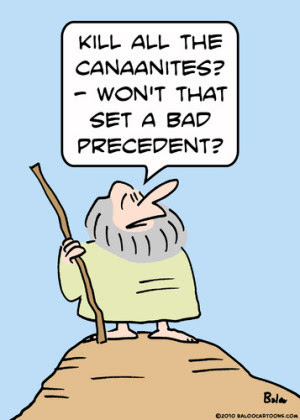
So the people shouted, and the trumpets were blown. As soon as the people heard the sound of the trumpets, they raised a great shout, and the wall fell down flat; so the people charged straight ahead into the city and captured it. Then they devoted to destruction by the edge of the sword all in the city, both men and women, young and old, oxen, sheep, and donkeys. Joshua 6:20-21

But if you do not drive out the inhabitants of the land from before you, then those whom you let remain shall be as barbs in your eyes and thorns in your sides; they shall trouble you in the land where you are settling. And I will do to you as I thought to do to them.  Numbers 33:55-56

In these texts of extreme violence, God not only orders the genocide of the Canaanites but is angry when some of them were spared. In Chapter 15 of the First Book of Samuel, we read that King Saul loses God’s trust, which is transferred to David, for having been too kind in sparing some Amalekites when God's command was to kill everyone, including women, children and the elderly.

The Old Testament is full of stories of violence that contradict the image of a compassionate and merciful God of the New Testament. This is the reason why the late atheist Saramago (the 1998 Nobel Prize winner in Literature from Portugal) said that the Bible was a violent book. Although fewer in number, however even in the New Testament we find some imperfections that could embarrass us.

History of Israel and the human nature

As far as the Old Testament is concerned, the Bible contains the history of Israel and the idiosyncrasies of the Jewish people, just as it has been throughout the ages. In this sense, the Bible is a literary work that is for the Jews what Camões’ The Lusiads is for the Portuguese and Shakespeare’s work is for the English.

In addition to the history and idiosyncrasies of a people, the Bible describes the fallen nature of the human being: the human being as he is, with his ups and downs, perfections and imperfections. Although inspired by God, the authors of the Bible did not sweep this fallen nature under the rug, because what is not taken on is not redeemed, as St. Athanasius later said.

The episode of the Pharisees bringing a woman caught in a blatant act of adultery (John 8:1-11) to Jesus can be read as a metaphor of what the Bible is: God's encounter with man, that is, the encounter of divine mercy with human misery.

From the beginning, right after the first sin, God did not abandon man to himself, but has been pedagogically accompanying him and sending him prophets, preparing him for His own coming as the model of human being to encounter the human being fallen into disgrace.

Jesus of Nazareth took on human nature, for he was like us in everything except sin, because sin does not belong to the human nature that God envisioned and created, but rather to the human nature that man ruined with sin. Jesus, God made man, takes on and accepts this fallen human nature, entering into fellowship with sinners, eating with them in their homes and walking in their company, without requiring them to change their lives. It is they who decide to change their lives when they find themselves unconditionally accepted by Jesus as they are, as seen in the episode of Zacchaeus (Luke 19:1-10).

You heard that it was said... But I say to you…
‘You have heard that it was said, “An eye for an eye and a tooth for a tooth.” But I say to you, Do not resist an evildoer. But if anyone strikes you on the right cheek, turn the other also; and if anyone wants to sue you and take your coat, give your cloak as well…’  Matthew 5:38-40

‘You have heard that it was said, “You shall love your neighbour and hate your enemy.” But I say to you, Love your enemies and pray for those who persecute you…Matthew 5:43-44

In the Sermon on the Mount, Jesus contrasts his doctrine, which he metaphorically refers to as new wine, with the doctrine of Moses and the customs of the Old Testament. He also establishes a new and eternal covenant that revokes the old.

Therefore, the norm for us is what the New Testament says and what in the Old Testament is in line with the New. In the latter, it is God himself, through his son Jesus Christ, speaking to human nature from within human nature. With Christ and his doctrine in mind, anyone who intends to use the Bible to justify acts of violence is misinterpreting it.

Read the Bible from front to back
And no one in heaven or on earth or under the earth was able to open the scroll or to look into it. (…) The Lamb went and took the scroll from the right hand of the one who was seated on the throne. (…) ‘You are worthy to take the scroll and to open its seals, for you were slaughtered and by your blood you ransomed for God saints from every tribe and language and people and nation…’  Revelation 5:3, 7, 9

Unlike other books, the Bible should be read from back to front. It is Christ, the Lamb who was slain, that can "open", that is, interpret, the Bible. It is from Him, the definitive word of the Father, that everything must be read, because everything points to Him. He and He alone holds the key to its interpretation.

The Bible must be read from back to front, that is, the Old Testament must be read from the New, from the perspective we acquire from reading the New. In this case, the key to interpreting these texts is the figure of Christ as the sacrificial Lamb of God.

Read the Old Testament in a metaphorical way
Taking this into account, the violent texts, especially those calling for genocide, can have a symbolic and metaphorical value. In this sense, Israel represents the will of God, the leaven of the Kingdom of God, the people whom God has called to begin the story of salvation with Him for all mankind. The enemies of Israel, the Canaanites, Philistines, Amalekites, Babylonians or Assyrians, are enemies to the universal plan of salvation. The struggle ceases to be physical and becomes spiritual.

When fighting against evil, call this for what it is, we cannot use half measures, because evil is not eradicated with half measures, but with radicalism so to uproot it. Wiping out Israel’s enemies, killing men, women, children and even their domestic animals now has the sense of eradicating evil at its root. Likewise, addiction to tobacco, alcohol or any other addiction is also not fought with half measures, but with radicalism and determination.

Conclusion: The late writer JosĂ© Saramago, an atheist and the 1998 Nobel Prize winner in Literature from Portugal, must already know that God does exist and that the Bible is made up of two Testaments – the Old, representing man as he is and the New, man as he should be, in the image of Our Lord Jesus Christ.   

Fr. Jorge Amaro, IMC

June 1, 2022

What Is Religion Good For?

No comments:

There are fewer and fewer religious people in the world. Could it be that religion is good for nothing, and serves no purpose? What do statistics say about the lives of those who are religious compared to those who are not? Which group is happier? Which group is better prepared to face misfortune?

A call to self-transcendence
In ancient times, men gazed at the stars at night and this lifted their thoughts beyond the toils and worries of everyday life. A gaze that lifted them beyond themselves and the world to the transcendence will naturally lead to greater self-transcendence. In modern times, however, men no longer look at the stars, but at the television.

Television in general, during the peak viewing hours or the so-called prime time, presents prime-less programs. Far from being a call to self-transcendence, television leads man to meddle even more in the most immediate and urgent, in the day-to-day affairs. Someone once said that contemporary men walk in circles, at odds with each other, because they no longer look up to heaven.

In one village there was a boy who threw stones at the moon; of course, he never hit his target, but he was of all the boys, the one who threw the farthest. So, what apparently seemed to be a nonsense, like throwing stones at the moon, served a purpose, the purpose of self-transcendence, the purpose of becoming a better stone thrower. The same happens with religion, which apparently seems to serve no purpose but in the long run its effects are noticeable and undeniable.

Search for meaning
Religion is no longer present in people's daily lives, because it no longer explains anything and has no practical applications that make life better and more pleasant. Science, on the contrary, explains more and more things and has practical applications for everyday life that make our lives more comfortable.

Science indeed does explain many things, but it does not explain the most important thing: it tells us that the world began with a "Big Bang," but it does not tell us who caused this big explosion or what was there before, and the purpose of the Big Bang. It tells us that since that big explosion, the world continues to expand and will expand until it expends all its energy and dies, but it does not tell us what is beyond the end of the world. Most importantly, between the "Big Bang" and the end of the world, it does not tell us what is the meaning of life, for what do we exist or why do we exist.

It is true that we can very well live without these questions, like the agnostics do by burying their heads in the sand; they think that in ignoring these questions, is the best way to answer them. With this kind of attitude, there would be no progress in any branches of knowledge. Science is born from asking questions and looking for answers.

The spirit of a human being is like a child who has just attained the age of reason. By the age of seven, the child gains self-awareness and discovers that he exists. He then questions everything and everyone, searching for reasons to satisfy his restless spirit. Usually, he clings to his parents or some adult he trusts and bombards them with a succession of whys, looking for the ultimate or primal reason for the uncaused cause.

This often leads adults, who do not want to admit God as the uncaused cause and the primary reason for everything and everyone, to a dead end. At that point, they tell the child to shut up and call him a nuisance. Thus, the child stops questioning himself and questioning others, and like the adults who are his mentors, he puts an end to this exercise of seeking the whys of everything and is content to live in pure mundanity, as do the rest of the living beings who have also stopped questioning themselves.

Science and the rest of the knowledge and instances of society all disagree on the problem of death. Only religion presents a coherent solution. The most intellectual ones, like Karl Marx, say that it should not worry us, because while we exist, death won’t exist and when eventually death comes to exist, we won’t exist.... The more materialistic ones say to make the most of life as one only lives once.

The conflict between science and religion is like the conflict between love and money. Nobody denies that having money has always been important and is increasingly more so, because with it one has access to an ever-increasing number of comforts and pleasures. Despite the undeniable importance of money in living, everyone agrees that love is even more important. Money cannot buy love, but love can buy money; without money life still has meaning, but without love it has none.

Technology, spirituality and ethics
If science, the general theory of things, is translated through technology into practical applications that make our lives easier, then religion, an even more general and more encompassing theory than science, is translated into day-to-day spirituality and ethics.

Science through technology does not tell us how to live our lives but it does lead us to a form of materialism and consumerism, that is, to filling our homes with junk.

Religion not only gives meaning to life but through spirituality and ethics, it shows us the path that leads to the fullness of life, to self-realization, that is, to the happiness that we all desire. What technology is to science, spirituality and ethics are to religion.

If technology contributes to the material well-being of the body, then spirituality contributes to the well-being of the soul. While science and technology are concerned only with the material well-being of man, spirituality aims at the well-being of the person as an individual being, ethics aims at the well-being of the individual as a social being and as an integral part of a community.

Those who live in pure worldliness will say that both spirituality and ethics can exist and subsist without religion. In fact, this is the tendency of the postmodern man.

This takes us back to the inquisitive child we compared previously to the true spirit of the human being. Faced with an ethics without religion, we are forced to conclude that if what really counts is what goes on down here, there is no ultimate reason for things, and if there is none, why should I be good if being bad, I get more things, more money and more pleasures?

Spirituality without religion is comparable to Buddhism, the path to enlightenment, an individualistic and selfish personal improvement that inevitably leads to a society of elites and castes that still prevails in the homeland of Buddhism. Religion calls spirituality to altruism, to say that we ought to love others as we love ourselves; that is, whatever good that we seek for ourselves, we ought to seek it in equal measure for others.

Conclusion: Since human beings are naturally religious, life in pure worldliness is a polytheistic religion that consists of the love of power, fame and pleasure and sees money as Zeus, the father of the gods.

Religion makes us free from attachment to material goods when we love God above all things; it gives us the joy of living when we love ourselves as God loves us, it builds a just and peaceful society when we love our neighbour as ourselves.  

Fr. Jorge Amaro, IMC


May 15, 2022

Mary: The New Ark of the Covenant

1 comment:

Many of the titles that apply to Mary in the litany that we recite after the Rosary may have originated in the imagination and devotion of God's people. Mary as the Ark of the Covenant, however, has its roots in the Bible. This is how the evangelist Saint Luke presents her.

Origin and purpose of the ark of the covenant
As a general rule, Judaism rejects public manifestations of spirituality, preferring to focus on actions and beliefs. In fact, the story of Judaism begins with Abraham who, according to ancient sources, destroyed the idols that were the conventional method of religious observance at the time.

The worship of images or statues is severely condemned throughout the Torah; the greatest sin that the Israelites collectively committed was the construction of the golden calf (Exodus 32) which was intended to serve as a material intermediary between God and them.

But in the history of the Jewish people, there was one exception to this rule. One man-made object was considered intrinsically sacred – the ark of the covenant.

Built during the desert crossing, it was used until the destruction of the first temple. The ark was the most important symbol of the Jewish faith and served as the material and concrete manifestation of God’s presence on earth. The legends associated with this object – and the severe punishments handed out to those who abused it – confirm the ark's centrality in Jewish faith of that period.

The construction of the ark is ordained by God to Moses while the Jews were still encamped in Sinai (Exodus 25). The ark was a chest of two and a half cubits long, one and a half cubits wide, and one and a half cubits high. It was made of acacia wood overlaid with pure gold, inside and outside.

At the bottom of the ark, four gold rings were fastened, through which two poles, also made of acacia wood overlaid with gold, were placed. The family of Kohath, of the tribe of Levi, would carry the ark on the shoulders of two men.

The ark was covered by a kapporet or mercy-seat of pure gold, that was two and a half cubits by one and a half cubits. Fixed to the mercy-seat were two hammered cherubim, also in pure gold. The two cherubim faced each other turned towards the mercy-seat, with their wings spread out and touching, overshadowing the mercy-seat.

Legend has it that the ark travelled in front of the people, burning scorpions, snakes, and thorns with jets of fire coming out of it, thus preparing the way for God's people. It also accompanied the soldiers to war; in fact, it was once taken by the Philistines during a battle.

From a spiritual point of view, the ark was the manifestation of God's physical presence on earth (the Shekhinah). When God spoke to Moses in the tent of meeting in the desert, he did so from between the two cherubim (Numbers 7:89). After the ark was moved to the most sacred and private space of the tabernacle, and later to the temple, it became accessible only once a year and only to one person. On Yom Kippur, the high priest (the kohen gadol) would enter this space to ask forgiveness for himself and for the entire nation of Israel (Leviticus 16:2).

Mary is the new Ark
The Virgin Mary is the Ark of the New Covenant because, "The Holy Spirit will come upon you, and the power of the Most High will overshadow you; therefore the child to be born will be holy; he will be called Son of God." Luke 1:35

The description that Mary was covered with the shadow and power of God is the same and only description found in the passage about the ark that we read in Exodus: Then the cloud covered the tent of meeting and the glory of the Lord filled the tabernacle (Exodus 40:34). It was in the tabernacle that the ark was located.

The ark travelled to a Judean town in the hill country to stay in the house of Obed-edom (2 Samuel 6:1-11). Mary travelled to a Judean town in the hill country to go to Elizabeth's house (Luke 1:39).

David asked, “How can the ark of the Lord come into my care?” (2 Samuel 6:9). Elizabeth asked upon seeing Mary, “And why has this happened to me, that the mother of my Lord comes to me?” (Luke 1:43).

Dressed in a priestly vestment, King David approached the ark, and danced and leaped with joy (2 Samuel 6:14). John the Baptist, the son of a priest, leaped with joy in Elizabeth's womb at the approach of Mary, the new Ark (Luke 1:43).

The ark remained in the house of Obed-edom for 3 months (2 Samuel 6:11). Mary stayed in her cousin Elizabeth's house for 3 months (Luke 1:56).

The house of Obed-edom was blessed by the presence of the ark (2 Samuel 6:11). The word blessed is used 3 times in Luke 1:39-45 about Mary in the house of Elizabeth.

The ark returned to its sanctuary and eventually ended up in Jerusalem, where the presence and glory of God were revealed in the newly built temple (2 Samuel 6:12; 1 Kings 8:9-11). Mary returned home after visiting Elizabeth and eventually went to Jerusalem, where she presented her son to God in the temple (Luke 1:56; 2:21-22).

The contents of the ark
The final proof that Mary is in fact the Ark of the New and everlasting Covenant is given to us by the contents of the ark. What then did the ark of the Old Covenant contain, and what did Mary, the Ark of the New and everlasting Covenant, contain?

Old law and new law – Mary is the Ark of the New Covenant, for just as the old ark held the tablets of the law (Hebrews 9:4), Mary held Christ, the New law, in her womb. The old ark contained the tablets of the law, the Ten Commandments; Christ is the new law, the law of love which sums up the commandments and goes beyond, for he invites us to love without measure while the commandments only told us what not to do.

The manna is the true bread that comes down from heaven – Mary is the Ark of the New Covenant, for just as the old ark held the manna, the bread that came down from heaven (Hebrews 9:4), Mary held Jesus, the true Bread, in her womb, for while those who ate the manna died, those who eat the true Bread have eternal life.

The manna is the bread that the Jews ate only to go hungry again. The true bread is the one that, once eaten, makes us never hunger again; it is the true bread descended from heaven which is Christ. This bread was sown in the womb of Mary, as a song of Fatima says:

"The Wheat that God sown in Mary's womb has become for us the bread that gives us life and eternal salvation.... Mary is the ground where this seed germinates 100%. She is also the oven that baked him for nine months and presented him.”

The shepherds Moses and Aaron and the Good Shepherd – Mary is the Ark of the New Covenant, for just as the old ark contained the staff of Aaron and Moses with which they shepherded the people of Israel (Hebrews 9:4), Mary contained in her womb the new and ultimate Moses, the one who is the Good Shepherd, the one who lays down his life for his sheep.

If the old ark contained the staff of Moses with which he guided his people and worked miracles, the new Ark contains the Good Shepherd, the one who gives his life for the sheep and tells us that we must recognize only one authority, one Father, one Teacher, one Lord who is God.

Conclusion: If the ark of the covenant, which only contained signs of God's glory, was venerated, then Mary, the New Ark of the Covenant, must be doubly venerated for having contained God Himself.

Fr. Jorge Amaro, IMC


May 1, 2022

Theotokos or Mater Dei?

No comments:

A zealous Protestant convert gets on a bus and announces, "Here is the letter and here is the envelope that it was sent in, we keep the letter and throw the envelope in the trash. Christ is the letter, Mary is the envelope. "Is your mother also an envelope that you throw in the trash?" someone asked, and got no answer...

Up until the 5th century, the Church's reflection revolved around the identity of Christ. But even before the Council of Chalcedon in 451, in which Christ was defined as true God and true man, the Church’s reflection had already revolved around his mother. In fact, in as early as 431 at the Council of Ephesus, Mary was declared "Theotokos".

"Ave, Theotokos! Hail, Mater Dei! Hail, Hail Mary! Hail, Hail, Mary!" prays a canticle of Fatima, translating the Greek term "Theotokos" into the Latin "Mater Dei", but this is not the correct translation. "Theotokos" means God bearer which is not the same thing as mother of God.

History of human reproduction
Until the beginning of the 20th century, it was not known that a human being was the result of the fusion of two half cells – the sperm from a man and the egg from a woman – some time after the sexual act.

In the course of evolution from the appearance of Homo sapiens 5 million years ago to the present day, there was a time when the origin of a new human being was not known. With his less developed intelligence, primitive man did not apply the principle of cause/effect that associated the sexual act with the birth of a child nine months later.

During this period, although man had more physical strength, it was the woman who ruled the world, because it was from her and only her that the future of human species came; it was she and only she who ensured the survival of human beings. Societies were matriarchal at the time; even to this day, in all languages the words Earth and Nature are feminine words; God was conceptualized as a woman, as a great mother.

With the discovery of man's role in reproduction, society abruptly shifted from matriarchy to patriarchy. After all, a woman had no say or part in reproduction; rather, it was the man who put the new being inside of her, and she was only the fertile ground where it grew. God was no longer thought of as a mother, but a father, and man relegated woman to the background to this day.

The definition of Mary as "Theotokos" or God bearer is in agreement with what was thought at the time of the Council of Ephesus about the role of women in the act of human reproduction. A woman is only the fertile ground where the seed grows; it is the man who implants this seed, the sperm, which in itself was understood as a homunculus, that is, a small human being, but already fully complete. If this belief were still in force today, Mary would be, like all women, merely a "surrogate".

Holy Mary, Mother of God...
But when the fullness of time had come, God sent his Son, born of a woman, born under the law... Galatians 4:4    

St. Paul does not say born through a woman, but born of a woman. Mother is the one who welcomes a child into her womb and genetically contributes to its formation; Mary is mother in both of these senses.

Reading the incarnation of Christ in the light of what we know today about the origin of the human person, we can then say that the sperm came by way of the Holy Spirit, so that Christ was truly God, and the egg came from Mary, so that Christ was truly man. Now if Mary is the mother of Jesus and Jesus is God, then Mary is the mother of God; a perfect and undeniable syllogism.

She is not the mother of God in the sense that she is the origin of God, or that she is older than God and the origin of Jesus’ divinity. She is the mother of God because she welcomed God into her womb, and because she contributed genetic material to the human form that God took in Jesus of Nazareth.

Going back to the envelope metaphor
Mary is not only "Theotokos", God bearer; she is like our mother, who welcomed and carried us for nine months, and who also contributed half of the genetic material that formed us. Mary is therefore not only the envelope that contained God but she is truly the mother of God.

"Whoever my children kiss, my mouth sweetens". A mother is happy when people treat her children well and sad when they treat them badly; the same can be said of a son with respect to his mother. How can Protestants love the son and disrespect or ignore his mother?

Still using the metaphor of the envelope, lovers who keep their love letters, keep them inside their envelopes. Christ is God’s love letter to humanity. Mary is that flowery and colourful envelope that contains this letter; whoever is a mother is always a mother.

Furthermore, the envelop also contains the address of the person who sent the letter. We need it to respond to the letter, just as we need Mary's mediation because since she was the mediator of the primordial grace that was Jesus Christ, she is the mediator of all graces.

Conclusion: Mary is not only Theotokos, God bearer, because she welcomed Jesus into her womb; she is also Mater Dei, mother of God, because she contributed her own genetic material in the conception of Jesus. In this sense, Jesus is the flesh of her flesh, blood of her blood. If, so to say,  the divinity of Jesus comes from God, then his humanity comes from Mary.

Fr. Jorge Amaro, IMC


April 15, 2022

The Body With Which We Resurrect

No comments:

"This is all very confusing; explain to me, Father: when we die, our bodies go into the ground, our souls go to heaven, and we? Where do we go?"

Death as a passage - Easter
From the point of view of our faith, we should not use the word death as if it were a final destiny. The deceased are the dead; deceased means gone, finished, the end. This however is not true in the context of our faith.

In this context, death is not the last thing that happens to us, but the second to the last. Death is more a stage of growth, the passage from a spatiotemporal life to an eternal life beyond space and time. We believe there is life beyond space and time because God our creator of space and time and lord of life is himself spaceless and timeless.  

Even in nature death is never a definitive state, but a passage from one form of life to another. According to Lavoisier, in nature nothing is created, nothing is destroyed, everything is transformed. The death of one living being always gives rise to the life of another. Life is a perpetual circle of living and dying, because life feeds on life, every living being is the food for another living being.

The grass that rises from the soil dies between the teeth of the gazelle that feeds on it. The grass does not die, it is transformed into the gazelle, which then become a lion, and when this dies, it is eaten by vultures and hyenas, which then give life to countless worms, which in dying, fertilize the soil that gives rise to new grass and so the cycle repeats itself.

Death is not a state, but a passage. Those who have near-death experiences speak often of a tunnel and a light at the end of this tunnel. The same happens when we are born: there is a tunnel and there is a light; in Portuguese to give birth is translated literally as to give light. Our birth can be viewed as our first death, a death to the life we had in our mother's womb. In the same way, our earthly death can be seen as our birth into eternal life, in the bosom of God.

Death is a passage from one form of life to another form of life, from being in the womb attached to our mother by the umbilical cord to coming into the light, breathing for ourselves. Life is a gift from God, it is the air that we inhale through our nostrils that leads us to start living until the day we exhale that air and we return to Him.

The butterfly metaphor
In nature, there are living beings that change form during their lives. The frog is one of them, and the butterfly is another. The change of form also requires a change of environment, both in the case of the frog and in the case of the butterfly. The butterfly is born as a caterpillar that crawls on its belly across the earth, eating leaves until the day it apparently dies.

What seems to be a death is in fact only a change of form which while maintaining some similarities with the previous form, it is also startling different from it. Our life on earth is like that of the caterpillar, and our life in heaven is like that of the butterfly; our physical body is like that of the caterpillar, very attached to the earth, while our spiritual body is like that of the butterfly, freer, flitting from flower to flower.

The caterpillar is a metaphor of our earthly life, of our physical body that is dependent on the earth. Like the caterpillar, we drag our body across the earth, but we are called to a higher life, we are potential butterflies. To become butterflies and realize man's dream of being able to fly, we have to go through a near-death passage. We cannot be a caterpillar and a butterfly simultaneously; to be a butterfly, we have to stop being a caterpillar.

Life as a butterfly is flying on a warm spring day in a sea of different flowers with other butterflies of different colours, through fields, valleys and meadows, in the light of the radiant sun of the early morning hours, this is the life to which we are all called: Heaven.  

The water metaphor
Another metaphor that nature gives us that helps to conceptualize Resurrection is the three physical states of water. Water, without ceasing to be what it is, that is, without changing into another compound, exists in nature in three different states that are so distinct from each other that one might even think that they are three different compounds when we compare them to each other.

It comes from the ocean in the form of vapour that cannot be seen. It condenses and falls on the earth, penetrates it and springs up, forming rivulets, streams and rivers. It is buried and springs up again, flowing and forming rivers, giving life along its way, until it returns to the sea.

Instead of rain, it can fall in the form of snow; at zero degrees Celsius, it freezes, becoming hard as a rock; at 100 degrees Celsius, it boils and evaporates and, without ceasing to be what it is,comes into existence in the gaseous state, invisible to our eyes and intangible to our touch. We can see and touch it again if it condenses on a surface colder than the air temperature.  

If water, without ceasing to be what it is, can exist in an invisible and intangible form, we could say almost in a spiritual form, how can we who have a body that is made up of 70% of this element not be able to also exist invisibly and intangibly?

The 12 physical bodies of our life
The first living being that inhabited this planet was a single-celled being; there are still living beings that are single-celled, like the amoeba. The ontogenesis recapitulates phylogenesis, that is, the millions of years of the history of life on this planet recapitulates or repeats itself abbreviated in the individual history of every human being who comes into this world.

We too were once a single-celled being that was formed by a half-cell from our father, the sperm, and a half-cell from our mother, the egg. The two joined and we were formed, a human cell with a unique genetic code in the history of mankind; in a comparatively short time, this cell subdivided into other cells to form an adult human body consisting of 30 trillion cells.

Each one of our cells follows the general law that governs life on this planet: to be born, to grow, to reproduce and to die. This explains the growth and the aging of our body. In fact, with the exception of our brain cells, the neurons, all others follow this general rule – we can say that every 7 years we change, every 7 years we have a biologically different body.

Within an average lifespan of 85 years, we have 12 different bodies. With which of these 12 bodies would we be resurrected? With none of them, because it is not the physical body that resurrects, but rather the spiritual body which is a synthesis of all of them, but none of them in particular.

What is the spiritual body?
For we know that if the earthly tent we live in is destroyed, we have a building from God, a house not made with hands, eternal in the heavens. For in this tent we groan, longing to be clothed with our heavenly dwelling – if indeed, when we have taken it off we will not be found naked.  2 Corinthians 5:1-3

Putting it simply and bluntly, our spiritual body in heaven is made up of all the treasures that we accumulate throughout our life here, (Matthew 6:19-34). These treasures, these spiritual goods, which at the end of our lives form a body that is our history, are the good works, or what we have managed to spiritualize with our material resources and our spiritual talents.

People say that those who give to the poor lend to God, that is, the money or any temporal material good, when it is used for a spiritual purpose, becomes an eternal good, that is, it becomes spiritualized or an accumulated treasure in Heaven.

Using a metaphor that we all understand, our life is like a distillery. Distillation is a process by which material goods are evaporated by boiling, thereby removing their essence. To obtain the essence of a perfume, for instance, it is necessary to distill tons of a particular flower, thus acquiring a few drops of its essence. Alcohol resulting from the distillation of grapes or barley is called "spirit", whisky and brandy or cognac are thus called because they result from the distillation process.

This is a story about a woman who was accustomed to all the luxuries and flattery that this world can give because she was rich and famous. She died one day and when she reached heaven, St. Peter took her by the hand to lead her to her heavenly dwelling.

As they passed by many charming Beverly Hills-style mansions, the woman thought that she would be assigned to one of these. But they continued, reaching the suburbs and the high-rise buildings with apartments and she thought, "Well, it'll be at least one of those," but no...

Then they arrived at the slums of Heaven and St. Peter showed her a hut made of cardboard and tin. "This is your home," said St. Peter. "What?" said the woman, "that? I can't live in this dump!” "I'm sorry," St. Peter said, “but this is all we were able to build for you with the materials that you sent to us during your lifetime."

It seems to me that the more mysteries of nature science unravels, the easier it becomes to believe in a God who has made everything, and in a life beyond death. In the context of Newton's mechanistic physics, where matter is matter and energy is energy, it was hard to believe in the Resurrection.

With Einstein’s quantum physics, where matter and energy are one and the same thing, that is, that matter can become energy and energy can become matter, it is much easier to believe that our material physical body can become an energized spiritual body.

Fr. Jorge Amaro, IMC

April 1, 2022

Religion and Science

No comments:

Science discovers; religion interprets. Science gives knowledge and power to men; religion gives them wisdom and control. Science is about facts; religion is about values. The two are not rivals, they are complementary. Science makes religion not fall into irrationalism, fanaticism and paralyzing obscurantism. Religion prevents science from falling into the swamp of obsolete materialism and moral nihilism."
Rev. Martin Luther King

Science and technology as the new religion
A growing number of people have been replacing faith in the omnipotence of God with faith in the pseudo-omnipotence of science and technology. Science discovers, technology applies, and our lives become more comfortable from a material point of view. In addition to material, the human person is also spirit, a spirit that questions the whys and the meaning of life and of everything around him. Science will never have answers to these questions, but religion does.

The agnostic will say that no one cares to know the "why" and the "for what". It is true, as the atheists say, that man is the moment when nature became aware of itself. However, it is precisely from that moment on that the human being began to seek the meaning of his life. Every individual, at the moment when he becomes aware that he exists, around 6 or 7 years of age, begins to wonder where he comes from, where he is going and what is the meaning of life; only animals do not do so, and it is only because they are not aware that they exist.

There are more and more people who have abandoned God in order to idolize science and technology. The idea that religion is nothing more than an ignorant and primitive way of investigating the mysteries of the world has taken root in public opinions nowadays. The episode of Galileo's condemnation earned the Church the reputation of obscurantist that prevails even to this day.

Galileo was condemned, on the one hand because the obstinate Church leaders of the time had not yet realized that the Bible does not reveal scientific truths, but only truths concerning human nature. On the other hand, as some historians say, Galileo did not present evidence to confirm his theory. Because we are on Earth, we do not perceive its movement and hence from this point of view, it seems that it is the sun that moves; the same happens to us when we travel in a car or a train – we who are in motion seem to be still, and the landscape that is fixed seems to move before our eyes.

Einstein was also criticized by some scientists of his time because his theory of relativity lacked empirical proofs, as it was an intuitive elucubration of Einstein's mind. It is only now that empirical evidences are beginning to appear that show the veracity of his theory.

Faith and reason
If God exists, then He exists as the Creator of everything and everyone; as creatures created by Him, it is not logical that our mind can encompass the mind of God, that the part can understand the whole. God can never be the object of science; for that matter, the same is true of man. In fact, the mystery does not involve only God and man, it is common to all areas of knowledge.

No science or area of knowledge can boast of having already discovered everything there is to know in its field; the more one knows, the more there is to know; therefore, the true wise man considers himself ignorant. Nicholas of Cusa called it the learned ignorance: in the face of the immensity of what there is to know, all I know is that I know nothing.

Science investigates nature; religion also investigates nature but more specifically, the nature of God. True science knows that the more one knows, the more there is to know. Religion also knows that but keeps on investigating the mystery of God, knowing that it can never encompass it in its totality.

Historically, reason has been constituted and instituted as science, which is the process of determining the behaviour of matter or of the universe using observation, experimentation and reason. Historically, faith has been constituted and instituted as religion, which is an organized system of beliefs, ideas or answers about the cause, nature and purpose of the universe that are not and cannot be the object of science.
 
Faith does not live only in religion, nor does reason only live in science. Faith and reason are complementary and we need both in our daily life. Practically every act contains a bit of reason and a bit of faith. In life, reason analyzes, faith decides. Without reason we would decide prematurely and make more mistakes than we already do; without faith we would never make a decision, nor risk a solution to our problems, because we would always think that something could have escaped our analysis and we fall into immobilism.

When I accept a cheque for a service rendered, in good faith I trust that the cheque is covered, it would be rude and I could lose a friend if I refused to take it and ask for cash instead. When I board a plane, I believe that the airport security has done a good job in preventing someone from putting a bomb in their luggage, and I believe the pilots are well trained and well-intentioned.

When I sit down to eat in a restaurant, I trust that the food is safe to consume and I do not demand that it be analyzed in a laboratory before eating it; it is this lack of faith and the fear of being poisoned that the cook in Ethiopia is made to always taste the food in front of the guests before a meal.

To know and to love
To know means to dominate and to control. If I know the principle that regulates rain, I can make it rain, as in fact the Chinese did a few days before the opening of the Olympic Games, to prevent it from raining on the opening day. With God, one cannot know Him in the same way. One knows God as one knows the human person.

A person only reveals himself, only makes himself known if he is loved. In contrast, if it is an enemy who knows us, we become vulnerable to him. Like all people, God only makes himself known to those who love him. We can’t love God or a person without getting personally involved with him. We cannot put God or a human person inside a test tube. To love is to implicate oneself with the beloved; among humans, knowledge without love is manipulation and control.

Church, society and science
In the case of abortion, it is the Church that is on the side of science, and the sociopolitical world, cultured or uncultured, that is against it. There is no scientist who denies that human life begins at conception, when half-cell consisting of 23 chromosomes – sperm – joins another half-cell consisting of the same number of chromosomes – the egg – forming an indivisible union, a human cell of 46 chromosomes with a unique, never seen, genetic code in the history of the universe.

This human cell immediately subdivides into replicas of itself, because all the cells that make up the human body contain the same DNA. Many people, following their conveniences, not science, decide that this embryonic life is not yet a human life, as if time could transform something that is not human into something that is human, or something that is not yet human to become human after a short time. Do these ignorant lovers of science forget that they themselves went through this embryonic phase and were they themselves not human at the time?

Abortion is a legalized homicide, a convenience for some, and a business for others. There is no scientific, moral or human basis for this killing and yet the science that knows that human life begins at conception also shuts up for convenience. This is Galileo Galilei of society and science, hypocrisy taken to its highest level.

The Church does not fear science
Far from fearing science, the Church even promotes it. The 19th century Augustinian friar, Gregor Mendel, is known to be the father of modern genetics. The only acceptable theory about the beginning of the universe is authored by Georges LemaĂ®tre, a Belgian Catholic priest. According to him, the "Big Bang" marks the beginning of Time, Space and Matter.  

Since in the universe as well as in nature nothing creates itself, it is perfectly plausible that it was God, someone outside of creation, the uncaused cause that by externalizing his creativity and love, caused an explosion of the atom he had previously created and, with this big explosion, created time, space and matter.

The Big Bang is the kick-off to an infinite succession of causes and caused, until it reaches the moment when a human being appears. Since the Church is not averse to science, Pope Pius XII, in his encyclical Humanae Generis, states that Darwin's theory of evolution of species is not in contradiction with the book of Genesis which, using mythological language, says that man was the last living being to be created. Whether it was created directly or as the end of an evolutionary process makes little difference.

The more science advances, the easier it is to believe. For centuries, the Bible and the Church have been ridiculed for speaking about the end of the world; today it is scientific to say that the universe had a beginning and will have an end. I firmly believe that science will never come to prove faith wrong, quite the contrary, the more science discovers, the easier and the more reasonable it is to believe than not to believe.

In which case not to believe will be reduced to a stubbornness that is more proud and ignorant than scientific or enlightened. We are not far from a time when we will be able to say, with all the scientific proof we have at our disposal, that only those who do not want to believe do not believe.

To speak of the miracles that Jesus did within the framework of Newton's mechanistic physics, according to which reality works like a perfect machine in the unalterable routine of a clock, is more difficult than to speak of the same topics in the framework of the theory of relativity and quantum physics, where there is no longer talks of fixed and absolute laws of nature, but of statistical probabilities. The Heisenberg’s uncertainty principle goes even further when it suggests that reality, far from being fixed and subject to routine, has a high degree of uncertainty and unpredictability.

For Einstein, matter is a form of energy, and energy is a form of matter; 95% of the universe is made up of dark matter that is invisible. How easy it becomes to speak about the resurrection, of the glorious body of Christ and of the spiritual body that we will possess after death!

Science tells us what the world is like and how it works; but the why of the world science can never find out because this is of another nature. 

Conclusion: Science discovers, technology applies, and our life becomes more comfortable. Religion discovers the meaning of life, ethics the values that define human nature, spirituality shows us the way to self-realization and happiness as sons and daughters of God.

                                                Fr. Jorge Amaro, IMC